
Currently Empty: $0.00

📦 BRAND NEW & SHIPS FREE VIA FEDEX
🔒 Unlock Exclusive Unadvertised Pricing
Apply code SAVE200 in your cart to reveal instant savings.
Includes Everything Needed to Rescue.
The Defibtech Lifeline AED (Semi-Automatic DCF-100) is ready to save a life right out of the box. We sell this unit direct without any unnecessary ...
$1,523.00
Buy Now

💰 UNLOCK LOWEST PRICE
Use Coupon Code HOME at checkout.
The Only FDA-Approved Defibrillator Available Without a Prescription.
The Philips HeartStart Home AED (M5068A) is designed for the ordinary person in the extraordinary moment. It features calm, "On-Demand" voice instructions that guide you through every step of a sudden cardiac arrest rescue.
📦 ...
$1,565.00
Buy Now
📦 IN STOCK & SHIPS FREE VIA FEDEX
🔒 Unlock Exclusive Unadvertised Pricing
Apply code SAVE500 in your cart to reveal instant savings.
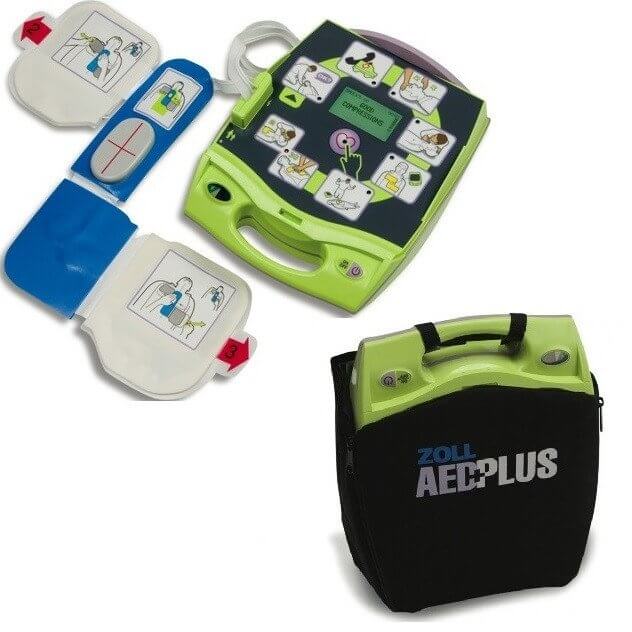
The Only AED That Sees Your CPR in Real-Time.
The ZOLL AED Plus Defibrillator features exclusive Real CPR Help® technology, providing instant coaching on compression depth and rate. As the ...
$2,082.00
Buy Now

Save $400 Instantly on the Philips heartstart onsite AED defibrillator M5066A with Coupon Code: V4TPUPVS. The Philips HeartStart Onsite complete AED package includes Onsite portable defibrillator, 4-yr long life battery, 8-yr manufacturer warranty, Adult SMART defibrillator pads, Slim carrying case, owner's Manual, and easy set up guide.
FREE Shipping
...
$1,589.00
Buy Now

Being a father of a young child and Serving as an EMT there is no worse feeling than not being able to help a child but now you can anywhere you go. Do you need a Philips child defibrillator fast, with a 8 year manufacturers warranty, and ...
$1,734.00
Buy Now
Showing all 5 results
Defibrillators for Home: How to Choose a Home AED That’s Really Ready to Save a Life
Defibrillators for Home: What This Category Covers for Sudden Cardiac Arrest
A significant proportion of sudden cardiac arrest events occur at home rather than in public spaces – and survival rates drop by 7% to 10% for each minute without treatment. Home defibrillators are automated external defibrillators (AEDs) built for residential use by everyday people, not hospital-grade devices that require clinical training. This page covers FDA-cleared, over-the-counter home AED models plus the OEM pads, batteries, and accessories that keep them ready to deliver a life-saving shock.
These devices are for families with a history of cardiovascular disease, caregivers of seniors, rural households where emergency medical services may be delayed, and safety-focused homeowners who want a second line of defense. The key decision comes down to two steps: picking the right device type for your household, then maintaining pad readiness and battery life so the unit actually works when needed.
Types of Home Automated External Defibrillators
“Home defibrillators” are essentially public-access AEDs used in a residential setting. Every model shares a core process – analyze the heart rhythm, guide the rescuer with voice prompts, and deliver a shock only when a shockable rhythm is detected. What separates them is the shock mode, form factor, and extra features like CPR coaching or pediatric capability. Here is how the range breaks down.
Fully Automatic Home AEDs
A fully automatic AED analyzes the heart rhythm and, if it detects ventricular fibrillation or another shockable rhythm, delivers the shock on its own after a clear voice countdown – no shock button press needed. AEDs are designed for untrained users with voice prompts, but panic can hinder effective use; removing the final button step means a stressed family member is less likely to freeze at the critical moment. Design traits include single-button power-on, loud audio instructions, and intuitive pad placement diagrams that work even in a dim bedroom at 2 a.m. AEDLand carries multiple fully automatic options suited for living rooms, bedrooms, and home gyms – browse Home AED Packages to compare ready-to-go kits.
Semi-Automatic Home AEDs
Semi-automatic AEDs also analyze the rhythm automatically, but they require the rescuer to press a clearly marked shock button once the device advises it. This gives trained users more control – they can confirm everyone is clear before delivering the shock. Semi-automatic units suit households where someone has CPR or first-aid training, such as homes of nurses, paramedics, or volunteer first responders. Models like the Defibtech Lifeline AED pair a prominent shock button with strong voice guidance so even less-experienced family members can follow along.
Home AEDs with Integrated CPR Coaching
Employing CPR alongside using an AED is crucial for improving the chances of survival. Some AEDs go beyond a simple metronome beep: they measure compression depth and rate through sensors and give real-time corrective prompts via audio and visual cues. Home AEDs provide integrated CPR guidance through audio and visual cues that keep rescuers on target – especially valuable in rural areas where EMS response times stretch to 10–20 minutes. The ZOLL AED Plus is a well-known example, using its CPR-D padz to monitor compressions and coach the user in real time.
Home AEDs with Pediatric Capability
If children are present, ensure the AED has pediatric capabilities or compatible accessories. AHA guidelines recommend reduced-energy delivery for children under 8 years old or under 55 lb (25 kg), achieved through dedicated pediatric pads or a key/switch that adjusts the energy dose. It is vital to keep pediatric pads in-date and stored with the device – an expired or missing set is a common blind spot. AEDLand sells both pediatric-capable AEDs and OEM child pads for major brands, including Philips M5072A Infant/Child Pads and Defibtech Pediatric Pads.
What to Look For in Defibrillators for Home
Beyond the sticker price, the features below determine whether your AED will be usable, reliable, and cost effective over its lifetime. Weigh each one against your household needs.
Ease of Use and Clear Instructions
High-stress situations complicate AED use; simplicity in operation is paramount for home devices. Look for loud, step-by-step voice prompts, big buttons, minimal controls, and pad diagrams printed directly on the electrodes. Some units add illuminated guides or flashlights – helpful when a cardiac arrest happens at night. AEDs are designed for easy use by untrained laypeople, but clear instructions still make the difference between confident action and hesitation.
Self-Testing and Maintenance Indicators
Look for AEDs with automated self-testing features for reliability. Quality home units run daily or weekly self-checks and display a green status light (or chirp an alert) so you know the device is ready without opening the case. This matters at home because there is no safety manager walking the halls. Typical battery standby life runs around 4–7 years; adult pads usually expire in about 2 years, though some brands offer up to 5 years. Electrode pads and batteries typically have a shelf life of 2 to 5 years, so tracking expiry dates is essential. AEDLand recommends keeping a spare set of OEM pads and batteries on-site.
Battery and Pad Replacement Costs
The purchase price is only part of the lifetime cost. Owners must replace pads by the printed expiry date and batteries when the device alerts or at the manufacturer’s interval – and immediately after every use. Replacement adult pads generally cost $75–$230 depending on brand, and batteries run several hundred dollars. Over an 8–10 year span, consumables can exceed the original device price. Read more in our guide to AED machine cost – and note that AEDLand offers genuine OEM parts with free shipping to help keep long-term upkeep manageable.
Pediatric and Adult Compatibility
Adult AEDs deliver energy levels calibrated for adult patients. Pediatric modes or child-specific pads reduce that energy for smaller bodies. Some devices require entirely separate pediatric pads; others use a key or switch that adjusts the output. If your household includes both adults and young children, confirm the model supports both age groups and that pediatric pads are easy to access and swap. AEDLand supplies adult and pediatric pads specific to each AED model.
Ruggedness, Size, and Storage Options
Homes vary – compact apartments, multi-story houses, detached garages. A lightweight, portable AED is easier to grab and carry between floors. If you plan to store a unit in a workshop or home gym, look for dust- and splash-resistant housings (check the device’s IP rating). Wall cabinets, carry cases, and bright signage keep the AED visible and protected without locking it away. AEDLand offers compatible wall mounts and cases for residential settings.
Regulatory and FDA Status for Home Use
The FDA approves specific AED models for over-the-counter purchase, meaning many home AEDs can be bought without a physician prescription. Since 2015, the FDA requires premarket approval not only for the device itself but also for necessary accessories like batteries and pad electrodes. Avoid buying used or uncertified defibrillators from non-medical marketplaces – unknown history means unknown risk. Users should also be aware of how to register their AED for alerts on updates and recalls. AEDLand sells only factory-sealed, manufacturer-authorized units appropriate for U.S. home use.
How to Choose the Right Defibrillator for Your Home
Turn the features above into a simple decision by matching your situation to the right AED group.
- Household risk level and medical history – Families with a history of cardiovascular disease or high-risk individuals at home may have a higher risk for sudden cardiac arrest. If someone in your home has prior cardiac arrest, arrhythmia, or an implanted device, prioritize a fast-access, fully automatic AED with CPR coaching – and consider a brand your cardiologist recommends.
- Who will be using the AED – An untrained spouse, a teenager, or an elderly caregiver will do best with a fully automatic device and strong voice prompts. Medically trained family members may prefer the control of a semi-automatic unit. In either case, AEDs are designed for untrained laypeople to use easily – but less complexity means less hesitation.
- Presence of children or grandchildren – Any household with kids regularly present should choose a pediatric-capable AED and purchase OEM child pads from day one. Keep those pads stored with the device, not in a separate drawer.
- Home layout and EMS response time – Emergency response times can be delayed, making having an AED at home beneficial – especially in rural or semi-rural areas where waits stretch past 10 minutes. Place the device where it can reach bedrooms and main living areas quickly. Homes with long EMS delays benefit most from CPR-coaching models and high-visibility AED placement.
- Budget and ongoing upkeep – Choosing an AED should consider maintenance needs for pads, batteries, and other consumables. Compare lifetime cost, not just the sticker price. AEDLand’s bundles and free shipping lower the total cost of ownership over the device’s lifespan. See the Essential Guide to Buying an AED for a step-by-step framework.
- Brand support and warranty – Check warranty length (often 5+ years), manufacturer reputation, and recall history via the FDA’s database. Buying from an authorized distributor ensures the warranty is valid and replacement parts are always available.
Frequently Asked Questions About Home Defibrillators
Below are direct answers to the questions people ask most when considering a home defibrillator.
Do I really need a defibrillator at home if I can call 911?
Yes. Survival rates drop by 7% to 10% for each minute without treatment during cardiac arrest, and typical EMS response times are often 8–12 minutes – sometimes longer in rural communities or bad weather. AEDs are most effective when used within minutes of a cardiac event to improve outcomes. Research shows that AED use in homes increases survival by 26% for shockable rhythms, and home AEDs can double or triple survival chances overall. In a witnessed cardiac arrest at home, having an AED on-site can be the difference between life and death. Data from one study found that outcomes were compared with cases without immediate AED access, and only 4 out of 32 patients survived after AED use at home, underscoring how difficult these events remain; many deaths after home cardiac arrest are not solely due to a shockable rhythm as the cause, which helps explain why gains in shockable-rhythm survival may not always translate into lower overall mortality. But without any intervention, the primary outcome is far worse, with out-of-hospital cardiac arrest survival to hospital discharge sitting at roughly 10% nationally.
Can I hurt someone by using a home AED if they don’t actually need a shock?
AEDs are accurate and will not shock non-cardiac arrest victims. Modern AEDs analyze heart rhythms and only shock if necessary – the device simply will not deliver energy unless it detects a shockable rhythm such as ventricular fibrillation or pulseless ventricular tachycardia. AEDs provide voice prompts to guide users through operation, and if no shock is needed the unit will announce “no shock advised” and coach you through cardiopulmonary resuscitation instead. Good Samaritan laws in most states also protect AED users from liability. AEDLand only carries devices that meet stringent FDA safety and accuracy standards.
Do I need a prescription or special training to buy and use a home defibrillator?
AEDs are FDA-approved for over-the-counter home purchase – many popular models can be bought without a physician prescription, but a home AED is not a substitute for clinician-guided treatment decisions for patients who may be candidates for other cardiac therapies. Some AEDs require a prescription depending on the jurisdiction and model, so check the specific unit’s regulatory status. Training is recommended but not required: AEDs are designed for use by untrained laypeople with step-by-step voice instructions guiding every action. That said, pairing your home AED with a CPR/AED class from a local organization builds confidence and reduces hesitation when seconds count.
How often do I need to replace pads and batteries in a home AED?
Electrode pads and batteries typically have a shelf life of 2 to 5 years. Adult pads commonly expire in about 2 years (some brands offer up to 5), while batteries last roughly 4–7 years in standby mode. Replace pads and batteries immediately after any use, and always check the printed expiry date and the device’s status indicator. AEDLand makes it easy to reorder exact OEM replacements by AED model – for example, ZOLL CPR-D Padz or Powerheart G5 batteries – with free shipping on every order.
Where should I keep a home AED so it’s easy to reach in an emergency?
Choose a visible, central location accessible 24/7 – a hallway near bedrooms, main living area, or vestibule near the front door. The device should not be locked away, but it should be protected from moisture and extreme heat or cold (check the manufacturer’s storage temperature range). Wall cabinets and carry cases keep the unit secure yet grab-and-go ready. Bright color and signage help family members and visitors find it fast. Minimize travel time: if your home has multiple stories, consider whether a second unit or a centrally located AED on the landing makes sense.
Are refurbished or secondhand defibrillators a good option for homes?
Used AEDs carry significant risk: unknown battery depletion, pads nearing or past expiry, outdated firmware, and limited or no warranty. The FDA requires that accessories be manufacturer-approved, and secondhand units from non-medical marketplaces rarely come with that assurance. Buying a new, factory-sealed AED from an authorized distributor gives you full manufacturer support, a clearer source for the device and its service history, guaranteed pad readiness, current software, and a valid warranty. AEDLand sells only new, authorized units plus genuine OEM consumables – so every device you receive is ready to perform when it matters most.
Be Ready: Explore Home Defibrillators and Supplies at AEDLand
The right home AED – paired with in-date pads and batteries – can turn a bystander into a lifesaver in the minutes before paramedics arrive. AEDs can double or triple survival chances during cardiac arrest, making them one of the most impactful pieces of safety equipment a household can own. Browse AEDLand’s curated home-ready AEDs to find the model that matches your family’s risk profile, budget, and comfort level – or contact our support team for help selecting a device and setting up a simple home maintenance schedule.