
Currently Empty: $0.00

💰 UNLOCK LOWEST PRICE
Use Coupon Code HOME at checkout.
The Only FDA-Approved Defibrillator Available Without a Prescription.
The Philips HeartStart Home AED (M5068A) is designed for the ordinary person in the extraordinary moment. It features calm, "On-Demand" voice instructions that guide you through every step of a sudden cardiac arrest rescue.
📦 ...
$1,565.00
Buy Now
📦 IN STOCK & SHIPS FREE VIA FEDEX
🔒 Unlock Exclusive Unadvertised Pricing
Apply code SAVE500 in your cart to reveal instant savings.
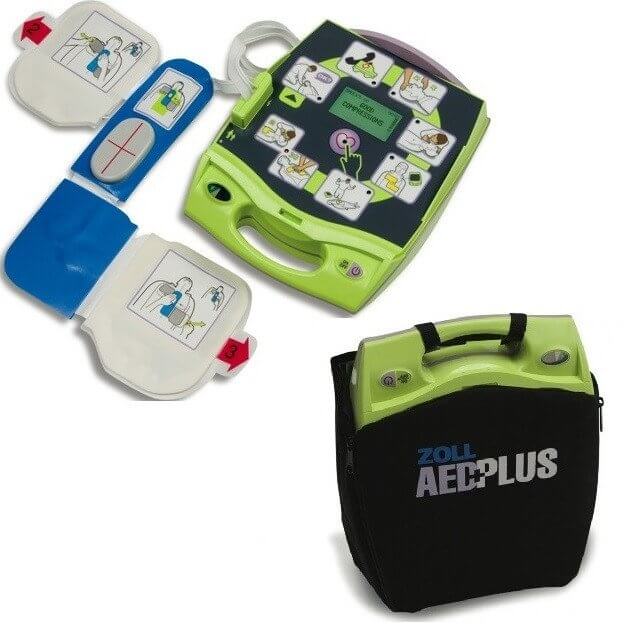
The Only AED That Sees Your CPR in Real-Time.
The ZOLL AED Plus Defibrillator features exclusive Real CPR Help® technology, providing instant coaching on compression depth and rate. As the ...
$2,082.00
Buy Now

📦 IN STOCK & SHIPS FREE VIA FEDEX
🔒 Unlock Exclusive Corporate Pricing
Apply code SAVE600 in your cart to reveal instant savings.
The #1 "Turnkey" AED Defibrillator Solution for Offices, Schools, & Warehouses.
Secure the ultimate all-in-one package to protect your employees and meet workplace safety standards. The Philips HeartStart OnSite is ...
$2,135.00
Buy Now
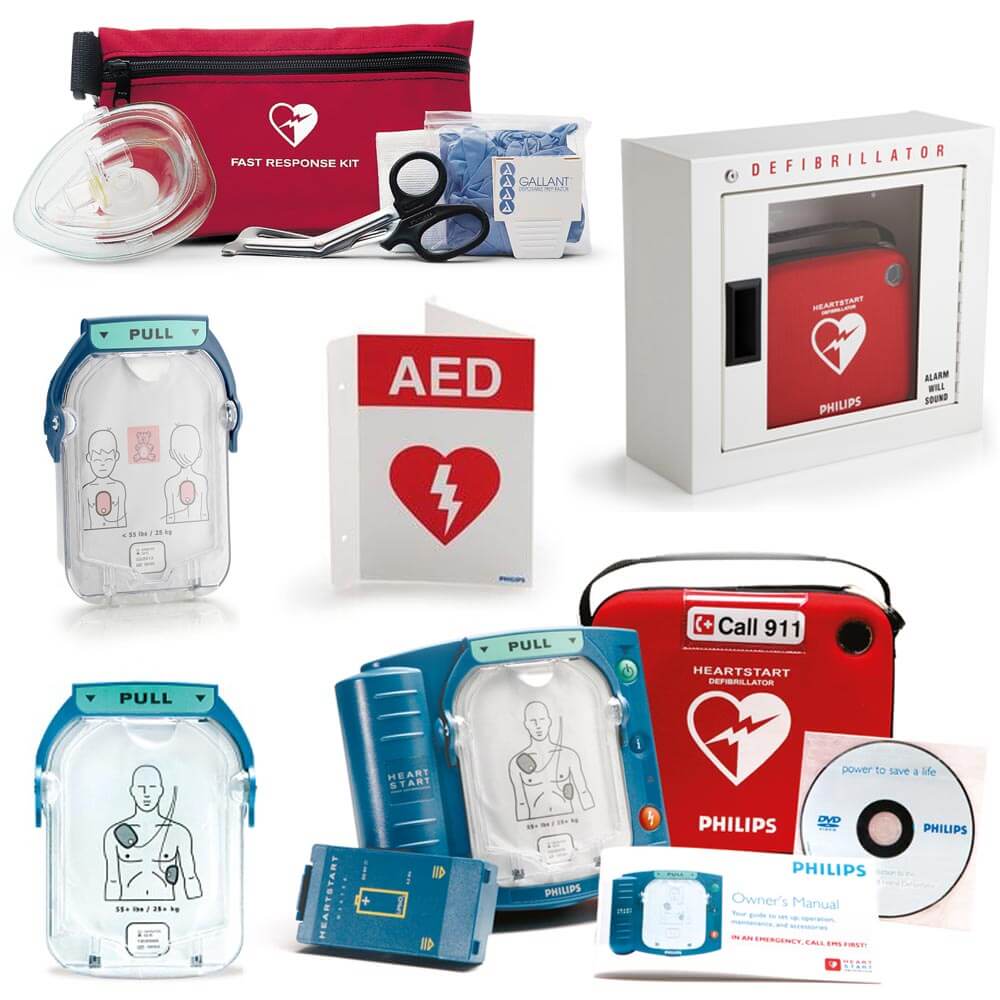
Philips HeartStart OnSite Community Package This Philips HeartStart OnSite HS1 OnSite Community Saver package is the BEST AED package for school, business, church, or any other public setting. This AED package includes many of the necessary Genuine Philips accessories that competitor packages do not include giving you ...
$2,272.00
Buy Now
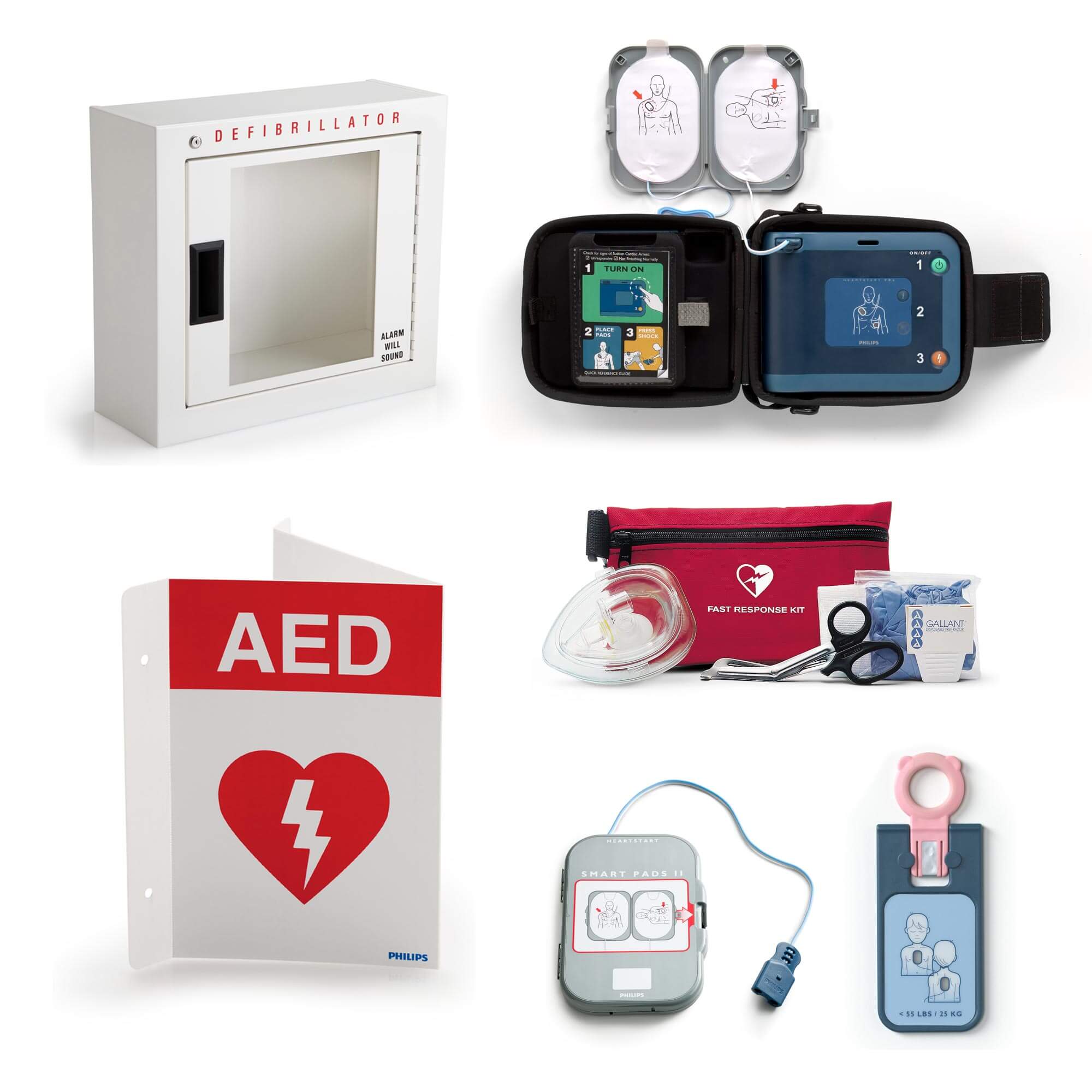
Equip your facility, school, or community center with the industry-leading Philips HeartStart FRx Community Saver Package. Built for extreme environments and designed for ease of use, this premium bundle includes everything your organization needs to be OSHA compliant and rescue-ready on day one—including an alarmed cabinet, premium ...
$2,649.00
Buy Now
Showing all 5 results
AED for Church: How to Choose and Equip Your Worship Space
Introduction: Why Every Church Should Consider an Automated External Defibrillator (AED) for Cardiac Arrest Emergencies
An automated external defibrillator (AED) is a portable, FDA-approved medical device that analyzes heart rhythm and can deliver a shock to restore normal heart rhythm during sudden cardiac arrest. For churches-where congregations gather weekly and often include older adults, children, and people with unknown heart conditions-having this lifesaving equipment on-site is a practical act of stewardship and care. Sudden cardiac arrest can strike any person at any age without warning, and survival depends on defibrillation within the first few minutes. Every minute of delay reduces a victim’s chance of survival by roughly 7–10%.
Whether you lead a small rural congregation or a large multi-site campus, an AED program is an achievable, affordable step toward protecting your church family. AEDLand provides church-friendly AED packages with OEM pads and batteries, free shipping, and the support needed to match a device to your building and budget. This guide will walk you through the types of AED solutions designed for churches, the features that matter most, how to choose the right device, and answers to the questions pastors, elders, and safety teams ask most often.
Types of Automated External AED Solutions for Churches
Not all AEDs are the same, and a church’s needs go beyond the device itself. Think in terms of a complete solution-device, storage, supplies, signage, and training-rather than just a box on the wall. Here’s how most congregations approach the decision.
Public-Access AEDs for Shared Church Spaces
Public-access AEDs are designed for use by untrained individuals. They feature loud, step-by-step voice commands, visual diagrams on the pads, and as few buttons as possible so that any bystander-usher, greeter, or visitor-can operate the device under stress. Modern AEDs analyze heart rhythm before delivering a shock and include a failsafe feature required for FDA approval, so they will not shock a person who does not need it. Defibrillators are FDA approved medical devices that can be used safely by laypeople.
These units are ideal for sanctuaries, lobbies, fellowship halls, and family life centers where large groups gather for worship, concerts, or community events. AEDs should be stored in visible locations for quick access during emergencies, and clear signage is crucial for locating AEDs during emergencies in church settings.
AED Packages Tailored for Small or Rural Churches
Small or rural congregations often face the longest EMS response times-sometimes 20 to 30 minutes or more-making an on-site AED especially critical. Budget-conscious church bundles typically include the AED, a wall cabinet, directional signage, adult electrode pads, a long-life OEM battery, and a rescue kit with scissors, a razor, gloves, and a CPR mask. A well-maintained AED includes necessary accessories like trauma shears and gloves.
AEDs typically cost between $1,500 and $3,000, and some models are priced as low as $1,500. Prices for AEDs have been decreasing over time, making them more accessible to smaller congregations. For example, the Avive Connect AED is priced at $1,699, with annual connectivity costing $199 after the first year. AEDLand helps match rural churches to reliable devices with robust batteries and clear maintenance schedules so that even a congregation of 75 can be covered.
Multi-AED Setups for Large Campuses and Multi-Site Churches
When a church campus spans multiple buildings-worship centers, gymnasiums, children’s wings, schools, or on-site daycare-one AED is rarely enough. The standard guideline is to position AEDs for retrieval within 3 minutes from any location in a facility, which means roughly 90 seconds of brisk walking from the farthest point. Large campuses may need two to four devices spread across buildings and floors.
Standardizing on the same AED model across every location simplifies training, keeps pad and battery replacement straightforward, and ensures any trained volunteer can respond confidently at any site. AEDLand can support a “fleet” approach, helping multi-site churches plan placement and keep supplies consistent.
Training and Demonstration AEDs for Church Safety Teams
Training community members enhances confidence in using AEDs during emergencies, and this kind of hands-on practice builds confidence with the live device. A dedicated non-shocking training AED lets ushers, greeters, children’s workers, and volunteers practice realistic scenarios without wearing out the real device’s pads and battery. Training is recommended for AED use in churches, and the American Heart Association recommends CPR training for AED users. Defibrillator training courses are also offered by the American Red Cross.
Having at least one set of OEM-compatible training pads and a demo unit that mirrors the live device makes drills feel authentic and is a good fit for church safety-team drills and CPR/AED events run by your organization. AEDLand carries AED trainers from Defibtech, Philips, and ZOLL so your safety team can learn on the same interface they’ll use in a real emergency.
What to Look For in an Automated External Defibrillator (AED) for Your Church
Beyond cost, certain features make an AED particularly well-suited for church environments-large gatherings, mixed ages from nursery to seniors, and volunteer responders who may use the device once in their lives. Here are the attributes that matter most.
Ease of Use and Clear Voice Prompts
In a cardiac arrest emergency during a worship service, stress is high and time is short. The best church AEDs offer single-button activation, loud step-by-step voice commands, rhythmic CPR coaching tones for compressions, and clear pad-placement diagrams. AEDs are designed for use by untrained individuals, and AEDs can be used effectively by laypeople with training. Look for devices that guide users calmly from power-on through shock delivery with minimal decision points. Some models also offer bilingual prompts-a valuable feature for diverse congregations.
Adult and Pediatric Capability
Churches often have diverse age groups requiring AEDs designed for pediatrics. If your church runs a nursery, children’s ministry, school, or daycare, you need pediatric capability. Some AEDs use a child-mode key or software switch to reduce energy delivery for children; others require separate pediatric pads. Children’s programs necessitate AEDs with pediatric modes or pads-stock both adult and pediatric consumables so you’re ready for victims of any age.
AEDLand offers OEM adult and pediatric pads matched to specific AED models, ensuring compatibility and eliminating guesswork in an emergency.
Battery Life and Pad Expiration
Most AED batteries last four to five years in standby mode, while electrode pads typically expire every two to three years because the conductive gel degrades over time-even if the pads are never used. Tracking consumables such as pads and batteries is critical for AED maintenance. A church that “has an AED” but whose pads or battery have expired is not truly protected.
Create a simple calendar reminder or checklist to track expiration dates, and order replacement batteries and pads from AEDLand a few months before they expire to avoid any gap in coverage during Sunday worship or midweek Bible studies.
Durability, Warranty, and Environmental Ratings
Churches should select an FDA-approved AED with a solid warranty-many current models offer seven to eight years of coverage-and a case robust enough to handle the realities of a busy facility. If the device will be located near an entrance, in a gymnasium, outdoor pavilion, or camp building, look for an IP55 rating or higher, which indicates strong resistance to dust and water. Lower-rated devices (IPX4, for example) offer only basic splash protection.
AEDLand helps churches register products, track warranty terms, and manage long-term support so your investment stays protected.
Visibility, Storage, and Security
An AED is only useful if people can find it in seconds. Wall-mounted AED cabinets with audible alarms placed near high-traffic areas-main entrances, sanctuary doors, fellowship halls-make the device readily accessible. Pair each cabinet with AED signage and directional decals so that any member or visitor can recognize and locate the device immediately.
During services and events, cabinets should remain unlocked for instant access, while basic alarm features deter tampering or theft during off-hours. AEDLand’s church bundles include cabinets, wall signs, and decals as part of the package.
Maintenance Alerts and Self-Tests
Modern AEDs perform automatic self-tests-daily or weekly-and display a clear status indicator (green check for ready, red X for attention needed). These features make it easy for a busy pastor, facility manager, or volunteer safety coordinator to confirm readiness with a quick glance. Monthly inspections should include checking the status indicator and supplies.
Regular documentation of AED inspections and maintenance actions is vital. AEDLand recommends a simple monthly inspection log, with the text of inspection records kept simple and consistent for church files, and can advise on management checklists that keep your device service-ready year-round.
How to Choose the Right AED for Your Church
With the features in mind, here’s how to turn them into a practical decision. Every church is different, so weigh these criteria against your specific setting:
Congregation Size and Campus Layout – A small, single-building church may need just one centrally located AED, while a multi-building campus with a gym, school, or daycare may require two to four units to maintain a response time under three minutes. Map your buildings and measure walking distances to determine how many devices you need.
Response Time for Local EMS – In rural or traffic-congested areas where ambulance arrival can take 10 to 30 minutes or more, an on-site AED is not optional-it may be the only difference between life and tragedy. Defibrillation within the first three to five minutes of collapse can double or even triple survival compared to waiting for paramedics.
Age Mix and Ministry Activities – Churches with active children’s ministries, youth sports leagues, or senior Bible studies should prioritize devices with pediatric capability and stock both adults and children’s pads. The wider your age range, the more essential this flexibility becomes.
Budget and Total Cost of Ownership – Look beyond the initial device cost. Over a five-year cycle, pads, battery replacements, cabinets, signage, and training can account for 35–50% of total ownership cost. Typical five-year totals range from roughly $1,800 to $3,000 depending on the model. AEDLand’s value-focused church bundles and free shipping help keep the overall cost manageable. For a deeper breakdown, see our guide to AED machine cost.
Volunteer Training and Comfort Level – Churches with limited training time may prefer the simplest AED interfaces-single-button, fully guided. Organizations investing in regular CPR/AED drills can consider more advanced features like real-time CPR feedback. Either way, training is recommended for AED users to ensure proper use.
Future Growth and Standardization – Choose a model you can easily duplicate as your church grows. Standardizing across all locations keeps maintenance simple, training consistent, and supply orders straightforward-saving time and cost for years to come.
Implementing an AED Program in Your Church
Purchasing an AED is only the first step. A reliable AED program requires planning, people, and practice. Establish emergency procedures that are simple and easy to follow:
Assign a Safety Coordinator or Team – Appoint an elder, deacon, staff member, or medical professional to oversee AED readiness, documentation, and training schedules, with one person able to coordinate outside guidance from a medical director, trainer, or other author of church safety policies. Having a designated AED program coordinator improves maintenance consistency.
Develop a Written Cardiac Emergency Plan – Outline who calls 911, who retrieves the AED, who begins CPR and compressions, and how to direct EMS personnel into the sanctuary upon their arrival when responding to cardiac arrest. The plan should also define responsibilities, document Good Samaritan protections and related rights, and reference the relevant section of state requirements if applicable. Many states provide limited immunity for trained AED users, so review church policy alongside state requirements. Keep the plan printed near each AED location.
Choose Strategic AED Locations – Place devices near the main entrance, sanctuary doors, gym or fellowship hall, and children’s check-in area with clear directional signage. The goal: retrieval within 90 seconds of brisk walking from any point in the facility.
Schedule CPR/AED Training – Train ushers, greeters, children’s workers, and interested staff members through the American Heart Association, American Red Cross, or your local EMS agency. Refresher courses every two years keep skills sharp. Learn more about essential skills for first aid CPR AED training to help your team prepare.
Set Up Routine Checks – Conduct weekly visual inspections to confirm the “ready” status indicator, perform quarterly deeper checks (pad connections, cabinet alarm, expiration dates), and maintain a written log. Regular inspections of AEDs are essential for church safety.
Communicate Availability to the Congregation – Make brief announcements, add signage in hallways, and include a note on your church website or bulletin so every member knows AEDs exist and where to find them. In an emergency, seconds of confusion can cost lives.
Review After Any Incident – If the AED is ever used, replace pads immediately, export event data if the device supports it, and debrief with your safety team to continue improving the response plan. Document everything for your records and your organization’s insurer.
Frequently Asked Questions About AEDs for Churches
Below are the real questions pastors, facility managers, and church boards ask when considering their first AED.
Does our church really need an AED if paramedics are nearby?
Yes. Even in urban areas, EMS response often takes six to ten minutes or longer. In public settings where bystanders apply an AED, survival to hospital discharge reaches about 34%-compared with roughly 10% overall for out-of-hospital cardiac arrest. Worship services, concerts, and community events bring together people of every age, including those with unknown heart conditions. An AED bridges the gap between collapse and the arrival of paramedics, and that difference can save lives.
How many AEDs does a church building typically need?
A reasonable starting point is at least one AED per floor or per distinct area, positioned so it can be reached within about 90 seconds of brisk walking-a roughly three-minute total response time. A 150-seat sanctuary with adjacent classrooms may be covered by a single, centrally located device. Larger campuses with separate gyms, children’s buildings, or outdoor pavilions may need two to four units. AEDLand can help map out coverage based on your building layout.
What does an AED for our church cost, including supplies?
New AEDs suitable for churches typically cost between $1,500 and $3,000, depending on features. Over a five-year ownership cycle, expect to replace pads once or twice (approximately $50–$200 per set) and the battery once ($150–$300). Total five-year cost for popular models generally falls between $1,800 and $3,000 when you factor in a cabinet, signage, and consumables. AEDLand’s church bundles combine these components at a reduced overall cost, with free shipping included.
Who is allowed to use an AED in a church, and what about liability?
AEDs are designed for layperson use-no medical background is required. Modern AEDs analyze heart rhythm before delivering a shock, so they will not shock a person who doesn’t need it. Federal law provides Good Samaritan protections for those who use an AED in good faith, and these protections have been shown in federal and state AED laws to support good-faith use by churches and volunteers. AEDs must meet local regulations and Good Samaritan laws for compliance. Churches may face litigation for not having an AED available, so equipping your facility is both a safety measure and a risk-management step. Consult your insurer and review your state’s requirements-AEDLand is familiar with common state-level AED regulations and can point you in the right direction.
How often do we need to replace AED pads and batteries?
Pads typically expire every two to three years, and batteries last about four to five years in standby mode-sooner if the device is used in a rescue or exposed to temperature extremes. Log every expiration date and order replacements from AEDLand a few months ahead of time so your church is never without a ready device.
Can our church share an AED with our on-site school or daycare?
Sharing is possible but requires careful planning. The AED must be located where both the church and school populations can access it quickly, and responsibility for maintenance, training, and documentation must be clearly assigned. High-traffic sites like K–8 schools often benefit from having their own dedicated device in addition to the church’s AED-especially when children’s programs run simultaneously with other church activities.
Next Steps: Equip Your Church With the Right AED
An AED program is a practical, affordable extension of your church’s mission to care for its community. Assess your risk, select an appropriate AED or bundle, plan strategic placement, train your volunteers, and commit to routine maintenance. These action steps turn a device on the wall into a genuine safety net.
Explore AEDLand’s church-focused AED packages, OEM pads, batteries, and training supplies-or contact our team for personalized assistance matching a device to your building, congregation size, and budget. Protecting the people who walk through your doors every week is one of the most meaningful investments your church can make.