Currently Empty: $0.00
When someone collapses from sudden cardiac arrest, the clock starts immediately. Knowing which AED device to buy, where to place it, and how to keep it ready can be the difference between life and a preventable death. This guide walks you through every decision so you can act with confidence.
Why Buying an AED Matters Right Now
Sudden cardiac arrest is not the same as a heart attack. During SCA, the heart’s electrical system malfunctions and the heart stops pumping blood effectively. Brain damage begins within minutes. According to clinical research, survival drops roughly 7–10% for every minute defibrillation is delayed when no CPR is performed. Early defibrillation increases survival rates significantly, which is why the American Heart Association lists it as a critical link in the chain of survival.
An AED machine analyzes the patient’s heart rhythm and delivers a shock only if a shockable rhythm like ventricular fibrillation is detected. AEDs provide step-by-step voice instructions for use, meaning untrained bystanders can use them effectively with the provided guidance. AEDs should be accessible within minutes of an emergency for effective use, and AEDs can save lives during sudden cardiac arrest.
AEDLand is an authorized distributor of FDA approved AEDs and AED accessories, specializing in churches, schools, workplaces, and home AED buyers. Core benefits include free shipping in the contiguous U.S., genuine OEM batteries and pads, and expert phone and email support to help you pick the right AED.
What Is an Automated External Defibrillator (AED)?
An automated external defibrillator is a portable device designed for emergencies involving cardiac arrest. Unlike a heart attack, which involves blocked blood flow, SCA is an electrical malfunction. The FDA defines AEDs as computerized devices that analyze heart rhythm and deliver an electrical shock if one is needed.
Key components of any AED device include:
-
Electrode pads that read the heart’s electrical activity and deliver the shock
-
A battery (typically lithium, non-rechargeable) powering the internal computer and charging circuitry
-
An internal computer that distinguishes shockable from non-shockable rhythms
-
Voice prompts and visual cues guiding pad placement, CPR timing, and shock delivery
-
Optional features like CPR feedback, Wi-Fi connectivity for status monitoring, and event data recording
Many modern AEDs include connectivity features for status monitoring and alerts. Here is how use works in practice: you power on the device, attach pads to the person’s bare chest as instructed, stand clear while the AED analyzes the rhythm, and either press the shock button (semi-automatic) or let the device deliver the shock automatically (fully automatic). AEDs can be semi-automated or fully automated devices.
There are public access and professional use AEDs. Most people searching to buy an AED need a public access unit intended for lay responders. Modern FDA approved AEDs from top brands like Philips, ZOLL, HeartSine, Physio-Control, and Defibtech are built for minimal training environments.
Key Decisions Before You Buy an AED
Before purchasing, treat this as a checklist. Choosing the right AED should consider user ease and environmental factors specific to your setting.
Typical buyer profiles include a safety manager at a business, a church administrator, a school nurse or coach, a homeowner caring for a person with heart disease, or a rural community leader. For each, assess these risk factors:
-
Number of people on-site regularly
-
Age profile of visitors (older adults, children, infants)
-
Distance from EMS and average response time
-
Previous cardiac events at the facility or in the family
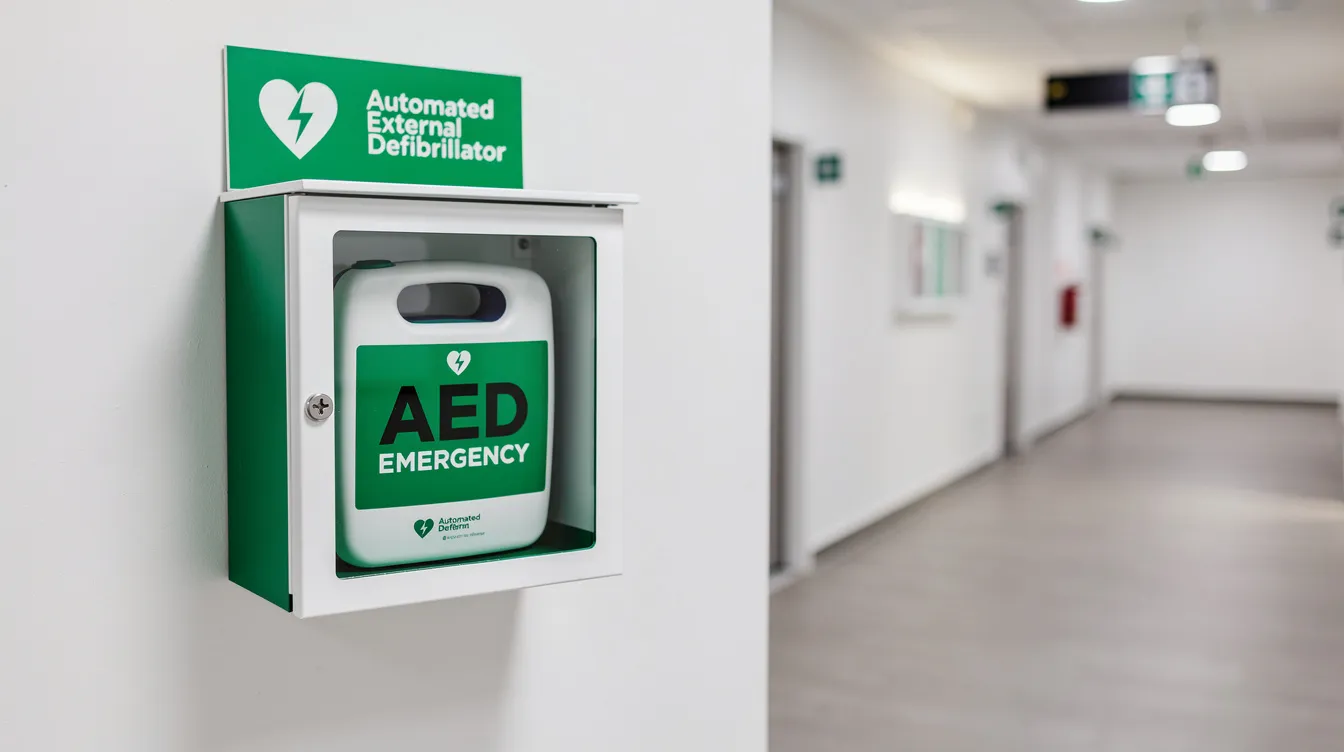
Proper placement of AEDs improves response time in emergencies. Indoor units need a visible, unlocked location. Outdoor deployments require heated or temperature-controlled cabinets to protect against cold, heat, dust, and moisture.
The total cost of ownership includes the device price and recurring maintenance costs. Entry-level AED packages typically start around $1,300, while premium connected AED packages with CPR feedback and extended warranties can exceed $3,000. Review AED machine cost breakdowns for concrete examples. AEDLand helps match buyers to the right AED based on setting, whether that is a church, workplace, gym, school, or home, and budget.
How to Choose the Right AED Machine
Not all automated external defibrillators are the same. Here are the core selection criteria to compare:
|
Criteria |
What to Look For |
|---|---|
|
Ease of use |
Clear voice prompts, intuitive diagrams, minimal buttons |
|
Shock delivery |
Biphasic technology, appropriate joule output for adult and pediatric use |
|
CPR coaching |
Real-time feedback on compression depth and rate |
|
Maintenance indicators |
Green ready light, audible warning for expired pads or low battery, self-tests |
FDA approval matters for reliability, liability protection, and regulatory compliance. Only purchase U.S.-cleared models with proper premarket approval (PMA). AEDs can be semi-automated or fully automated. Semi-automatic units prompt you to press a shock button, while fully automatic units deliver the shock after a warning. Churches and offices often choose fully automatic for simplicity under stress.
Pediatric capability in AEDs varies by model and may require specific pads or a pediatric key that reduces energy output for children under 55 pounds. This is relevant for schools, churches with children’s programs, gyms, and youth sports. Training on AED usage is recommended for effective response, and employees and users should be trained in CPR and AED operation for preparedness. If you are unsure, contact AEDLand for help selecting the right AED based on your staff’s CPR training level, environment, and local regulations.
Popular AED Brands and Models (Including Philips HeartStart)
AEDLand focuses on reliable, long-supported AED manufacturers with strong OEM supply chains rather than off-brand imports.
The Philips HeartStart OnSite is designed for lay rescuers with simple controls and clear instructions. Philips HeartStart OnSite AED provides real-time voice guidance, delivers 150 joules for adult shocks and 50 joules in pediatric mode, and runs automatic self-tests daily, weekly, and monthly. It remains one of the most popular choices for community spaces, businesses, and churches.
Other well-known models include:
-
ZOLL AED Plus: emphasizes robust CPR feedback with real-time compression coaching and long-life batteries and pads
-
Defibtech Lifeline: known for ultra-portability and a straightforward, reliable interface
-
Powerheart G5: offers customizable prompting levels and dual voice and text instructions
AEDLand curates its stock to models with strong manufacturer support, readily available OEM pads and batteries, and clear FDA status. Customer service can compare options side-by-side for buyers stuck between two AED machines.
AED Packages vs Standalone Units
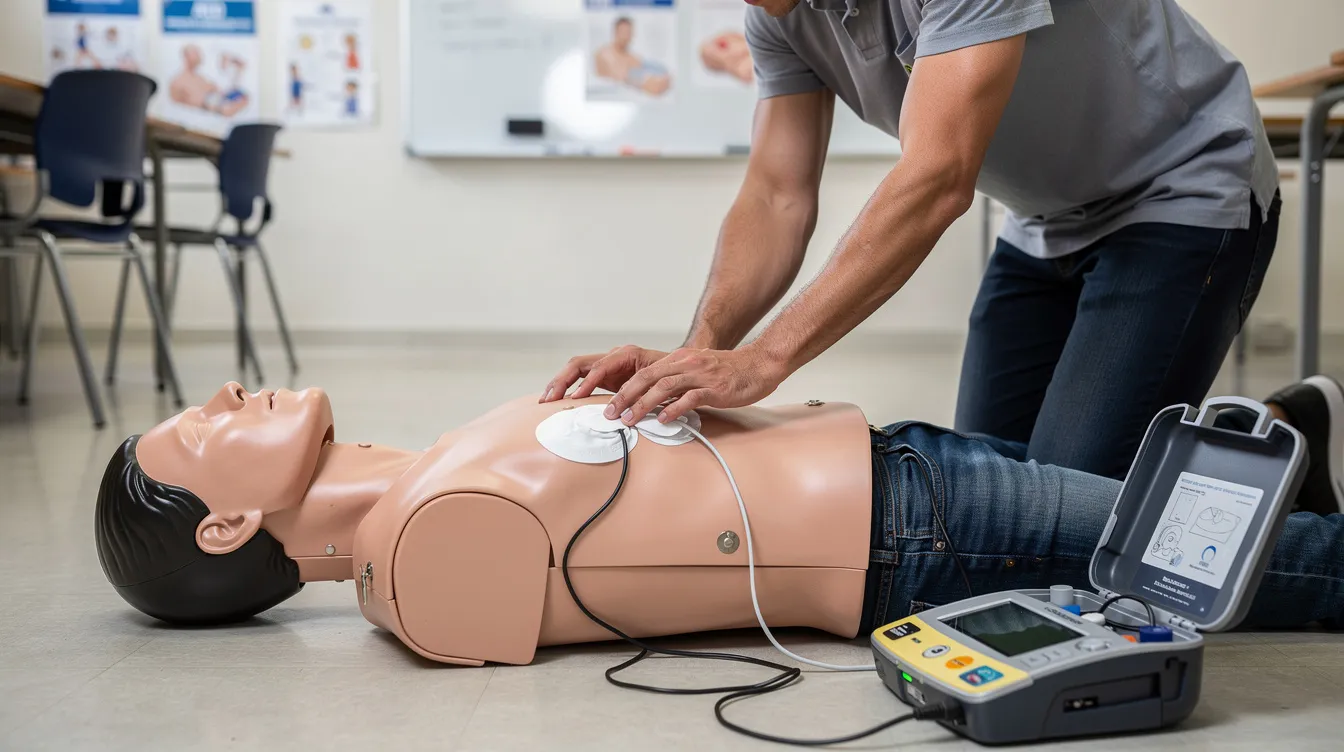
An AED package bundles everything an organization needs for a rescue-ready installation. Most organizations should buy a complete AED package rather than the base device alone. A typical bundle includes:
-
AED machine with adult pads and battery installed
-
Wall cabinet and directional wall sign
-
Rescue aid kit (scissors, razor, face shield, gloves)
-
Quick reference guide
-
Training pads available for AED training purposes
AED accessories include carrying cases and wall mounts. Purchasing a combination of device and accessories in a bundle delivers cost savings, easier budgeting, and assurance that nothing critical is forgotten. AEDLand offers tailored AED packages for churches, schools, businesses, and gyms. Optional add-ons include pediatric pads, spare batteries and pads, CPR training coordination with a trainer, and program management tools for organizations installing across multiple sites. OEM accessories protect your manufacturer warranty and ensure reliable performance.
Home AED: Is an AED Right for Your Household?
According to the American Heart Association, 73.4% of cardiac arrests occur at home. That notice alone makes a home AED worth considering, especially in these scenarios:
-
A household member has diagnosed heart disease, arrhythmia, or a previous cardiac event
-
You live in a remote or rural area where EMS response may exceed 8–10 minutes
-
Multiple older adults share a household
Talk with your cardiologist or primary care physician before purchasing to confirm a home AED is appropriate and not redundant with an implantable device.
A good home AED has a simple interface, clear voice prompts, low maintenance, and a carrying case. The Philips HeartStart Home AED is designed specifically for home use with straightforward pediatric options if children or infants are present. AEDLand focuses exclusively on FDA-cleared units suitable for residential settings.
Store the device in a visible, accessible location known to every person in the household. Perform monthly status checks and keep pads and batteries in date. Review the AEDLand Home AED review for a detailed look at what to expect.
AED Maintenance, Accessories, and Readiness
Buying an AED is only step one. Ongoing readiness is what allows a device to actually save lives when a cardiac emergency strikes.
AEDs require batteries and pad electrodes to function properly. AED pads must be replaced every 2–5 years depending on the model and manufacturer, and batteries typically last 2–5 years in standby. The FDA requires premarket approval for AED accessories, so always use OEM supplies to maintain compliance and performance.
Regular maintenance and self-testing are important for AED readiness. Most devices run automated self-tests on their pads, battery, and circuitry. AEDs should be checked regularly for battery and pad expiration. Adopt a simple routine:
-
Weekly or monthly visual inspection of status indicator light
-
Verify pads are sealed, undamaged, and within expiration
-
Confirm battery install-by and expiration dates
-
Log every check for compliance documentation
Critical AED accessories beyond the device itself include spare pads, spare battery, rescue kit, signage, and a carry case. Each contributes to a faster, safer response. For a complete rundown, see AEDLand’s pad placement guide. AEDLand provides automated email reminders for expiring supplies and stocks OEM replacement pads and batteries for every major brand.
Why Buy Your AED from AEDLand
AEDLand is a family-owned company and specialized AED store serving both businesses and home buyers since its founding. As an authorized distributor for major brands like Philips, ZOLL, and Defibtech, AEDLand sells only factory-sealed, FDA approved AEDs and genuine OEM accessories.
Here is what sets AEDLand apart:
-
Lowest-price mindset with free shipping on AED orders within the contiguous U.S.
-
Responsive expert support via phone and email to help you choose and maintain your AED
-
Tailored AED packages for churches, schools, rural communities, gyms, and businesses, not one-size-fits-all kits
-
Automated reminders and ongoing support to protect your investment and keep your organization compliant
Every minute without defibrillation during a collapse matters. Do not let your facility, congregation, or family go unprotected. Contact AEDLand with your setting, budget, and timeframe so a specialist can deliver a personalized recommendation. Or head to the AED packages page, select the right AED for your environment, add the supplies you need, and complete checkout. Life-saving protection ships free.