
Currently Empty: $0.00
February 3, 2025
0 Comments
Essential Skills for First Aid CPR AED Training
Emergencies can happen anywhere, at any time. Being prepared to respond can make the difference between life and death.
This is where First Aid CPR AED Training comes into play. It equips you with the essential skills to act swiftly and effectively in a crisis.
CPR, or Cardiopulmonary Resuscitation, is a life-saving technique used during cardiac arrest. It helps maintain blood flow to the brain and heart until further help arrives.
An AED, or Automated External Defibrillator, is a device that can restore a normal heart rhythm. It’s a critical tool in the fight against sudden cardiac arrest.
This article will guide you through the importance of First Aid CPR AED Training. It will provide insights into CPR and AED use, and how to become certified.
Whether you’re a healthcare professional, an employer, or simply someone who wants to be prepared, this guide is for you. Let’s dive in.
Understanding the Importance of First Aid CPR AED Training
First Aid CPR AED Training equips individuals with vital skills needed in emergencies. These are not just theoretical concepts; they save lives. By learning these skills, you can make a meaningful difference when it matters most.
Cardiac arrest is a leading cause of death worldwide. Rapid response with CPR and AED can significantly improve survival rates. Training ensures you know how to act quickly and confidently in such situations.
Many employers and organizations are now recognizing the importance of having trained staff. OSHA recommends First Aid CPR AED Training to boost workplace safety. Employees who are well-trained contribute to creating a safer environment for everyone.
Moreover, First Aid CPR AED Training is not limited to workplaces. It is valuable in homes and communities as well. This training is essential for anyone who wants to be prepared, whether you’re a parent, teacher, or community member. Being ready with these skills empowers you to help others effectively.
The Basics of CPR: What You Need to Know
CPR, or Cardiopulmonary Resuscitation, is crucial during cardiac emergencies. It combines chest compressions with rescue breaths to maintain circulation. This keeps oxygen flowing to vital organs until advanced care arrives.
The technique begins with assessing the patient’s responsiveness and breathing. If unresponsive and not breathing, call 911 immediately. Starting CPR involves chest compressions at a rate of 100-120 compressions per minute, with a depth of at least 2 inches for adults.
High-quality chest compressions are key to effective CPR. The American Heart Association emphasizes this aspect in its guidelines, updated every five years. While often intimidating, these skills are easy to learn with practice and training. Regular training ensures you’re ready to step in when required.
How AEDs Save Lives: A Simple Guide
An AED, or Automated External Defibrillator, plays a vital role in life-saving efforts. This device can restore a normal heart rhythm during cardiac arrest. It’s designed for simplicity to allow use by anyone, even without prior training.
When someone collapses with heart issues, time is critical. An AED quickly analyzes the heart’s rhythm and determines if a shock is needed. Once connected to the victim, voice prompts guide users through the process. This ensures correct application and increases survival chances.
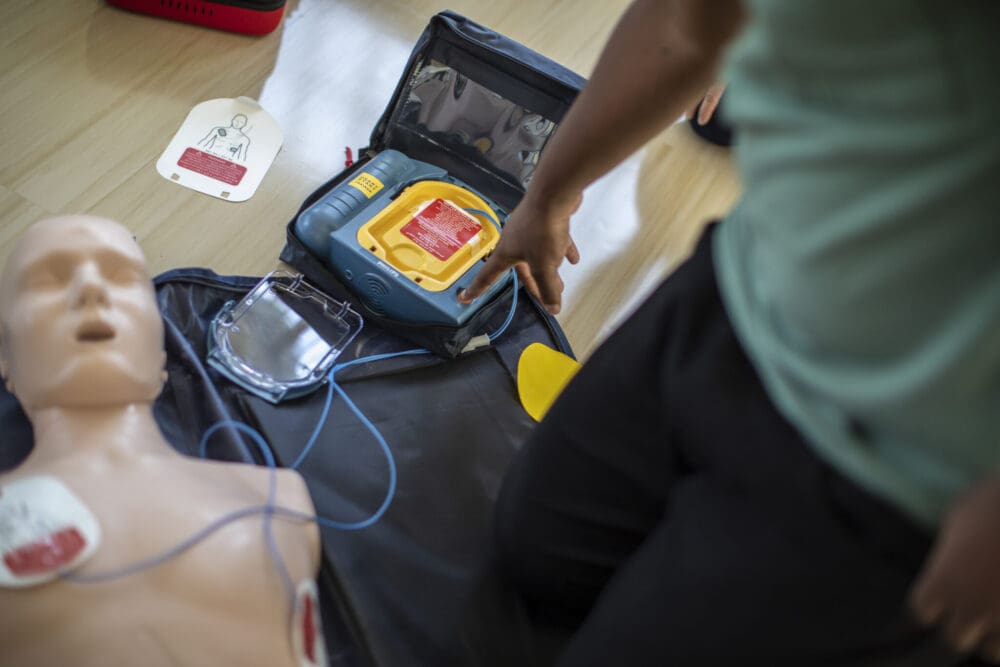
Correct placement of AED pads on the chest is essential. This allows the device to deliver an effective shock. Learning to operate an AED is a core part of first aid courses. By understanding its operation, users can act fast in emergencies and improve outcomes. These devices are crucial in public spaces, schools, and workplaces, providing an extra layer of preparedness.
OSHA Guidelines and First Aid CPR AED Training
OSHA, the Occupational Safety and Health Administration, strongly endorses First Aid CPR AED Training. Their guidelines highlight the importance of training in creating a safer work environment. Employers are encouraged to ensure that employees are equipped with these life-saving skills.
Compliance with OSHA guidelines not only promotes workplace safety but also prepares employees for emergencies. Adequate training can reduce response time and save lives. Businesses that implement these programs demonstrate a commitment to employee well-being. This proactive approach often results in fewer workplace incidents and enhanced preparedness for all.
Steps to Perform CPR: A Quick Reference
Performing CPR can be vital in saving a life during cardiac emergencies. The process begins by assessing the scene for safety. If safe, check the victim for responsiveness.
Firstly, make sure the person is on a firm, flat surface. Kneel next to them, keeping yourself positioned correctly. Initiate contact by shaking the person’s shoulders gently and calling out to them. If there is no response, CPR is needed.
Next, begin chest compressions right away. Place your heel of one hand on the center of the chest, placing the other on top. Keep your elbows straight, shoulders directly over your hands. Use your body weight to help compress the chest by at least 2 inches at a rate of 100-120 compressions per minute. Allow the chest to fully rise between compressions.
Here’s a simple breakdown:
- Check for responsiveness and breathing.
- Call 911 or have someone else do so.
- Begin compressions: 100-120 per minute, 2 inches deep.
- After 30 compressions, give 2 rescue breaths if trained.
- Continue cycles of compressions and breaths until help arrives.
If trained, open the airway using the head-tilt, chin-lift maneuver before giving rescue breaths. Pinch the nose shut and ensure a good seal over the mouth. Provide two breaths, ensuring the chest rises.
Continue this sequence, checking for signs of life. Always be prepared to continue until emergency help arrives or the person shows signs of recovery. Maintain calm, assuring swift and continuous action.
Operating an AED: Key Points to Remember
Operating an AED can seem daunting, but these devices are designed for simplicity. When arriving on the scene, quickly retrieve the AED and power it on. Follow the clear voice prompts that guide you through each step of the process.
After turning on the AED, attach the electrode pads to the victim’s bare chest. The correct placement is crucial: one pad should go on the upper right side and the other on the lower left side. Ensure there is no contact between the pads, as proper placement allows the AED to analyze the heart’s rhythm accurately.
It’s essential to step back and ensure no one is touching the victim during the analysis. The AED will decide if a shock is needed. If advised, loudly announce “Clear!” to warn others to stay away and press the shock button. After delivering the shock, resume CPR as instructed by the AED, continuing until professional help arrives.
Getting Certified: The Path to CPR Certification
Earning a CPR certification is a vital step in being prepared to save lives. Many organizations offer programs designed to teach these essential skills. Courses can be completed online, in person, or in a hybrid format.
During the training, you’ll learn the critical steps of performing CPR and using an AED. These programs often include hands-on practice, allowing you to build confidence. This is crucial in ensuring you can act swiftly and accurately in emergencies.
It’s also important to choose a reputable training provider. The American Heart Association and the Red Cross are popular choices that adhere to the latest CPR guidelines. Completing a course from such providers ensures that your certification is recognized and respected. Once you’ve completed the course, remember to renew your certification regularly, as maintaining current knowledge is key to effective life-saving interventions.
Choosing the Right AED Trainer and Training Program
When selecting an AED training program, consider the credentials of the AED trainer. Look for trainers who are certified and have extensive experience in emergency medical response. Their expertise ensures you receive high-quality instruction and practical insights.
Furthermore, evaluate the training program’s structure and content. A comprehensive program should include both theoretical knowledge and practical skills. It should cover various scenarios and ensure you are prepared for real-life emergencies. Check if the program aligns with recognized standards and guidelines, such as those from OSHA, to ensure its credibility. Opt for a program that suits your learning style and schedule to maximize your training experience.
Maintaining Your Skills: The Importance of Regular Practice
Regular practice is key to retaining your first aid skills. Over time, without practice, your proficiency can diminish. Engaging in periodic refresher courses helps reinforce the essential techniques.
Moreover, ongoing practice ensures familiarity with any updates to CPR and AED protocols. These can change, such as the recommended compression rate or new safety guidelines. Staying current not only boosts your confidence but also enhances your effectiveness during emergencies. So, prioritize routine practice sessions to keep your lifesaving skills sharp and reliable.
Legal Considerations: Good Samaritan Laws and Duty to Act
Understanding legal aspects of providing aid is important. Good Samaritan Laws protect those helping in emergencies, encouraging action without fear of lawsuits. These laws vary by region, so familiarizing yourself with local regulations is crucial.
The Duty to Act applies to certain professionals like healthcare workers. They are legally required to provide aid in emergencies. Knowing these responsibilities ensures compliance and promotes swift and effective responses during critical situations. Whether you’re a professional or a bystander, understanding these legal considerations can instill confidence as you step forward to assist.
First Aid Beyond CPR and AED: Handling Other Emergencies
First Aid CPR AED Training covers more than just cardiac emergencies. Participants learn to manage various situations, like bleeding, burns, and fractures. This broadens the scope of assistance you can provide when needed.
Choking is a common emergency included in First Aid training. Techniques such as the Heimlich maneuver are crucial. Recognizing the signs of choking quickly can be life-saving, especially in children or the elderly.
Being prepared for incidents like allergic reactions or electrocution is vital. First Aid courses teach how to stabilize a victim until professional help arrives. Such skills are essential for anyone, making First Aid an indispensable tool for comprehensive emergency preparedness.
Conclusion: The Lifesaving Impact of First Aid CPR AED Training
First Aid CPR AED Training equips you with vital skills. These abilities can make the difference between life and death. Having this knowledge means you’re ready to act in emergencies and provide critical aid.
Training enhances confidence and effectiveness during crises. By acquiring these skills, you play a pivotal role in improving survival rates. Preparedness fosters a safer community, encouraging others to follow your lead. Empower yourself and those around you by learning these life-saving techniques.
Call-to-Action: Sign Up for First Aid CPR AED Training Today
Empower yourself with life-saving skills by enrolling in First Aid CPR AED Training. Your actions can make a crucial difference during emergencies. Don’t hesitate; take the first step towards becoming a certified responder. Join a training course and boost your confidence in handling life-threatening situations.