
Currently Empty: $0.00
August 16, 2026
0 Comments
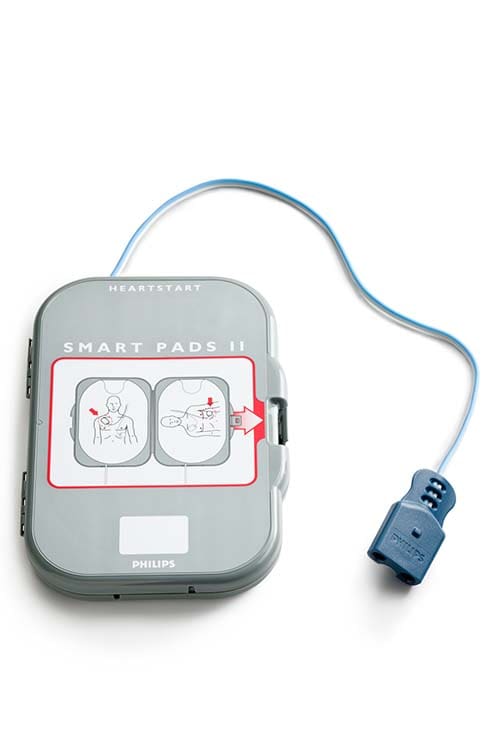
🛑 Quick Answer & Replacements: Philips HeartStart FRx SMART Pads II have a strict 2-year lifespan. The AED will not beep to warn you when they expire. Check the hourglass symbol (⌛) on the foil pouch for the hard expiration date. If your pads are expired or expiring within the next 60 days, replace them immediately to maintain legal compliance.
👉 Buy Philips HeartStart FRx SMART Pads II Here (In stock and ready to ship fast)
When managing a Philips HeartStart FRx AED program for a school, corporate office, or industrial facility, checking the battery is usually the first thing on a safety officer’s mind. However, the most common reason an AED fails to deliver a life-saving shock during a sudden cardiac arrest emergency isn’t a dead battery—it is expired defibrillation pads.
If you are inspecting your facility’s AED and wondering exactly how long the Philips FRx SMART Pads II last, the baseline answer is two years.
But for facility managers, simply knowing the date isn’t enough. To keep your facility legally compliant, protect yourself from liability, and ensure your AED is Rescue Ready, you must understand the engineering behind the expiration, storage limitations, and what your AED’s self-test isn’t telling you.
1. The Science of Failure: Why Do AED Pads Expire?
Unlike the rugged plastic casing of the FRx defibrillator, the SMART Pads II are medical-grade consumables. Their functionality relies entirely on a specialized, water-based polymer gel (hydrogel) applied to the foil backing.
This hydrogel performs three critical functions during a rescue:
-
Adhesion: It aggressively bonds the pad to the victim’s bare chest, ensuring it stays attached even in sweaty, hairy, or wet conditions.
-
Conductivity: It creates an electrical bridge between the AED and the patient.
-
Burn Prevention: It distributes the 150 Joules of electrical energy evenly across the skin.
Over the course of 24 months, even while sealed inside an airtight foil pouch, this water-based gel slowly degrades and dries out.
What happens if you use expired pads? If the gel is dried out, the electrical resistance (impedance) becomes too high. The AED will recognize poor contact and may refuse to deliver the shock. Even worse, if the shock is delivered through dried-out gel, the energy will arc, potentially causing severe electrical burns to the patient’s chest.
2. The “Chirping” Myth: Why Your AED Won’t Warn You
There is a dangerous misconception among AED owners that the machine will beep or “chirp” to warn them when the pads are expired.
The Philips HeartStart FRx will NOT beep to tell you the pads have expired.
While the FRx performs rigorous daily, weekly, and monthly self-tests, it is only testing the electrical continuity and presence of the pads. The AED’s computer does not have a camera or a calendar reader; it cannot read the expiration date printed on the outside of the foil pouch.
If your pads expired six months ago but are still plugged into the machine, your AED’s status indicator will continue to flash green, giving you a false sense of security. Visual inspection of the printed date is the only way to verify pad compliance.
3. How to Find and Read the Expiration Date
Philips makes visually checking the expiration date on the SMART Pads II simple. You do not need to open the gray foil pouch or turn on the AED.
Look at the front of the pads pouch. Near the bottom center, you will see an hourglass symbol (⌛). The date printed directly next to this hourglass is your hard expiration date. It is formatted internationally as YYYY-MM (For example, 2026-10 means the pads expire on the very last day of October 2026).
4. Storage Environments: Heat and Cold Degradation
The two-year lifespan of the SMART Pads II assumes they are stored in normal conditions. Extreme temperatures will drastically accelerate the drying out of the hydrogel, causing the pads to fail long before their printed expiration date.
-
Standard Standby Temperature: The FRx and SMART Pads II should be stored between 32°F and 122°F (0°C to 50°C).
-
The Danger of Vehicles: If you keep your FRx in the trunk of a police cruiser, work truck, or outdoor athletics shed, summer temperatures can easily exceed 122°F. Prolonged exposure to baking heat will melt and separate the hydrogel.
-
Cold Weather: Freezing temperatures can cause the water-based gel to crystallize. While the pads can survive temporary drops below freezing, they should not be permanently stored in sub-zero environments.
5. Liability and The “Single Use” Rule
As a facility manager, maintaining current pads is a strict liability issue. If a sudden cardiac arrest occurs and the pads are found to be expired, your organization’s “Good Samaritan” legal protections may be voided due to gross negligence.
Furthermore, Philips FRx SMART Pads II are strictly single-use.
-
If the foil seal is accidentally punctured or torn during an inspection, the pads must be thrown away immediately, as the gel will dry out in a matter of days.
-
If the pads are placed on a patient during an emergency—even if the AED analyzes the heart and advises against delivering a shock—they are contaminated and compromised. They must be discarded and replaced before the AED is put back into service.
- Related Guide: Did you know these exact same pads are used for children? Learn how the FRx Infant/Child Key eliminates the need to buy separate pediatric pads.
Keep Your Facility Rescue Ready
Never wait until the month your pads expire to order a replacement. Supply chain delays in the medical device industry can leave your facility unprotected. AEDLand recommends ordering your replacement pads 30 to 60 days before the date printed next to the hourglass.
Additionally, keeping a “Spare” set of SMART Pads II tucked into the carrying case of your FRx is highly recommended. If a pad gets damaged or placed incorrectly during a chaotic rescue, having a backup set instantly available can save a life.
Check the hourglass symbol on your pads today. If they are expired, or within 60 days of expiring, order a fresh set of factory-direct replacements here:
👉 Buy Philips HeartStart FRx SMART Pads II
In stock and ready to ship fast from AEDLand—your authorized Philips distributor.